
When trauma shapes our image of God
We can believe something about God with our minds and still expect something very different from Him in our hearts. We may say that God is loving, compassionate, merciful, and present, because those are truths we have learned through Scripture and through the Church. Yet when something goes wrong, when we've experienced trauma, when that trauma has been compounded and remains unresolved, another belief can rise almost automatically. Beliefs that the God Who Is is nothing like the God others have portrayed to us. That God is two faced or treats people differently, and that while others may receive His loving compassion, we are destined to be abandoned, forgotten, and left to suffer.
Where do these beliefs come from?
Most of us learned what authority, love, safety, correction, and trust looked like long before we had the words to describe them, long before anyone introduced us to the God of creation and the God of the Bible. We learned these things through our parents, or our caregivers. Sometimes we learn these things through our teachers, sometimes through clergy, pastors and other religious leaders Often times we also build these beliefs through other family members, and so many other important people in our lives. And this is by design. God desires those relationships to be loving and trustworthy, so they could help us understand something true about God. But for those of us suffering from trauma where authority was frightening, unpredictable, overly critical, restrictively controlling, and perhaps outright abusive, or neglectful, these relationship teach us to expect those same things from God, and this creates a disconnect from the God we know and the God everyone else is talking about.
This does not necessarily happen consciously. A woman may know perfectly well that her father is not God and still find herself afraid that God will respond to her the way her father did. She may know that God hears prayer while finding it almost impossible to believe that He is actually interested in what she has to say because her prayers and needs seem to go unanswered. She may know that the Bible talks about God's love as freely given while she is living as though she must work very hard to remain worthy of it. Trauma often teaches the body and heart expectations that the mind alone cannot simply talk away.
In Phase 4, we take a deeper look at what we actually believe about God. We begin separating what we have learned about Him through other people and through our own experiences from what is true about His character. Today, we want to offer you a small piece of that work by asking you to consider what your life experiences have caused you to learn to expect from God.
This matters because many women can easily recite a list of God's good characteristics. You may know that Scripture describes Him as compassionate, kind, gentle, loving, and faithful. You may agree with every one of those words and have even more characteristics you would add. But agreement is not necessarily trust. Before we can begin replacing a distorted image of God, we need enough honesty to recognize the image we are already carrying.
How do we re-imagine God's character?
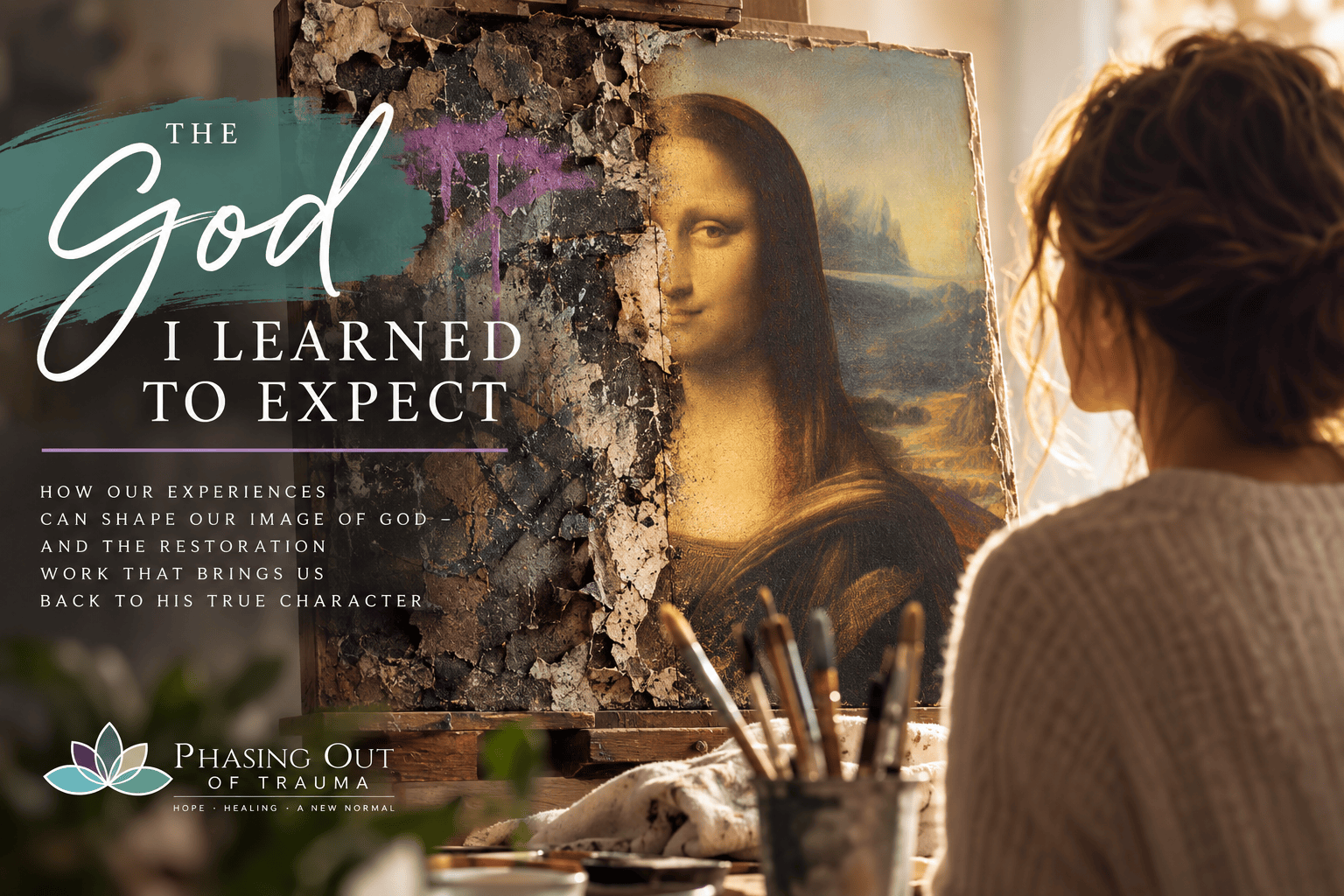
Think of it like the restoration of a priceless masterpiece that has finally been recovered and returned to the museum of you. The painting has survived fire. It has been spray-painted over, torn, covered in soot, spit upon, and damaged in ways no one ever anticipated. Someone may tell you that the Mona Lisa is underneath all of that, but simply naming the masterpiece would not be enough to make it visible. The restoration work has to begin.
As layers are carefully removed and pieces are repaired, glimpses of the original begin to appear. With each glimpse, hope grows. Confidence grows. You begin to believe that the masterpiece really is there beneath everything that has happened to it. In much the same way, simply being told that God is loving, compassionate, faithful, and kind may not be enough when your experiences have taught you to expect something very different from Him.
God's true character is the masterpiece beneath those accumulated layers. Throughout Phase 4, we begin the careful work of separating what happened to us, what others taught us, and what trauma caused us to expect from who God actually is. As that restoration takes place, we can begin not only to believe more deeply in His character, but also to believe that we are worthy of experiencing His compassion, kindness, gentleness, love, and faithfulness in our own lives.
For some women, that image they hold of God in the face of their trauma may be an angry God who is waiting for them to fail. For others, He may seem distant, demanding, controlling, impossible to please, or simply too busy to care about the details of their lives. For a woman whose pleas for help were ignored, God may feel like someone who does not listen. For a woman who was harmed while adults failed to protect her, one of the deepest questions may be, Where was God when this happened to me? Those questions are not evidence that you are failing at faith. They tell us something about the wounds through which you may have been trying to understand God.
Jesus as our guide
Throughout Phasing Out of Trauma, we learn how to separate what people did from who God is. Human beings can betray, abandon, manipulate, neglect, control, and abuse becasue they have free will to either act our of love or out of fear, pain, guilt, shame. Their actions do not define the character of God. One of the clearest places Christians can look when asking what God is actually like is Jesus. When Philip asked Jesus to show the disciples the Father, Jesus answered, “Whoever has seen me has seen the Father” (John 14:9). If we want to know how God responds to wounded people, frightened people, ashamed people, grieving people, angry people, confused people, or people who do not yet understand what is happening to them, we can begin by watching Jesus.
And what do we see?
We see Jesus moving toward people others avoided. We see Him listening. We see Him asking questions rather than forcing Himself upon people. We see compassion toward suffering, tenderness toward grief, patience with confusion, and fierce opposition to those who use power to burden others. We hear Him describe Himself as “meek and humble of heart” and invite the weary to come to Him for rest (Matthew 11:28–29).
This does not mean God never corrects us, challenges us, or calls us toward change. Love is not indifference. But God's correction cannot be understood through the behavior of an abusive, humiliating, controlling, or unpredictable human authority figure. Scripture continually describes God as “merciful and gracious, slow to anger and abounding in steadfast love” (Psalm 103:8; see also Exodus 34:6).
For someone who has experienced trauma, that difference can take time to become believable.
This is why here in the beginning we will not ask you to correct anything, we start this as we start all things - with simply creating awareness. You are invited to notice. As you look at at and reflect on the Spiritual Practice accessed here, consider which words feel familiar when you think about God? Angry? Critical? Distant? Controlling? Demanding? Impossible to please? Does He feel like someone who listens to everyone except you? Does a part of you believe He should have protected you and therefore conclude that because something terrible happened, He must not care? All of these types of thoughts are welcome here, and expected and desired to come out here. If we don't look honestly at what we are carrying we have no way of letting it go, and allowing God to replace it with truth.
Once we honestly are able to say what these impressions of God are that we hold as true to how He interacts with us personally, then we can begin asking another question: Where did I learn to expect this type of behavior from? Perhaps a parent became angry whenever you made a mistake, and now prayer feels dangerous when you believe you have done something wrong. Perhaps affection was withdrawn until you performed well, and now you find yourself trying to earn God's love through obedience, ministry, perfection, or religious performance. Perhaps no one believed you when you told the truth about what happened, and now when you pray you wonder whether God believes you either.
Who is qualified to teach us about God?
The purpose of this reflection is to recognize that we have given some human beings the authority to tell us what God is like who were never qualified for that job. We hope that this practice gives you hope, and shows you what you can expect as you enter into your own Phase Journey. Here in Phase 4 we are given us an opportunity to begin separating those unqualified voices from the qualified voice of God. We learn to say: This is what happened to me. "This is what someone taught me to expect. This is how I learned to survive around authority. And this may be the image I have projected onto God."
Once we can see that image, we can begin asking whether it is true. That process should not be rushed. Because we believe that only God can reveal the truth of who He is to you, an that takes time. And that starts with safety - safely encountering God, and learning to trust that He is safe, that He desires your good, and that you are worthy of the good He wants you to receive. We do not want women to change their interpretations about the image of God simply because we tell them to - we give God the time, the space, and the permission to reveal His character to our members through encounters of Him in Scripture, through the incarnation of Jesus Christ, through the goodness and beauty of His creation, through healthy and meaningful Christian community, through honest prayer, and through the slow practice of allowing Him to show up for them when they are ready to ask, “God, who are You really?”
That is a very different kind of healing - it's healing that is transformative, and healing happening at each member's own time. This type empowerment allows each woman who has spent years trying to please an impossible-to-please God to encounter the Father who already loves her. It allows each woman who expects criticism over every single mistake and spiritual failure to begin to notice Christ's grace and understanding. It allows each woman who fears being manipulated and controlled once again to discover that God does accepts her agency, and delights in her freewill, and desires to see her step forward in empowerment. It allows each woman who believes she has been utterly abandoned because she is unworthy to begin exploring what it means that God's character does not change simply because the people who were supposed to represent love to her did; that God is love, and that Jesus went to prepare a place for her within that love, and will not stop until she's comfortably able to abide within it.
The worksheet accompanying this reflection begins with the image you currently carry. You may discover things there that are uncomfortable to admit, even to yourself. You do not need to censor them, make them sound more faithful, or hurry to fix them, you are encouraged to bring them into the light. Because before we can recognize the difference between the God we learned to expect and the God who actually is, we first have to be willing to see the image we have been carrying. And in Phase 4, that honesty becomes the beginning of learning something new: not merely what we have been told about God's character, but what it might mean to slowly experience Him as He truly is.