
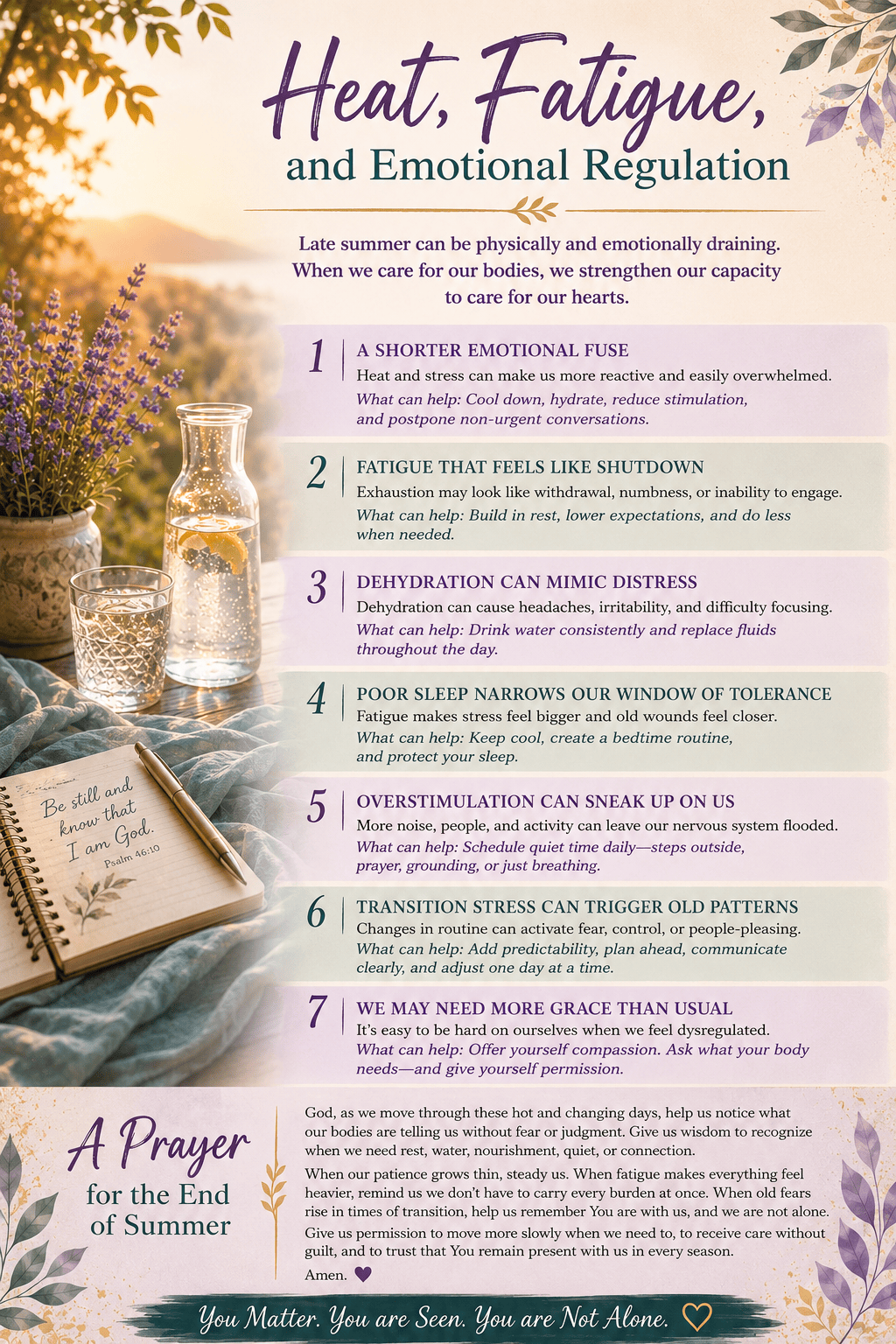
Late summer can take more out of us than we realize. Heat, disrupted sleep, dehydration, busy schedules, and the return to school-year routines can all place additional stress on the body, and when our bodies are taxed, our emotional capacity can feel smaller too. For women who have experienced trauma, that may mean feeling more irritable, overwhelmed, tearful, anxious, shut down, or simply “not quite ourselves” without immediately understanding why.
1. A Shorter Emotional Fuse
When we are overheated or physically depleted, things that would normally feel manageable can suddenly feel much bigger. We may notice ourselves becoming impatient, reactive, easily frustrated, or more sensitive to noise, interruptions, conflict, or demands from others. Rather than judging yourself for having a harder day, consider whether your body may need cooling, hydration, nourishment, quiet, or a little less stimulation before asking yourself to process something difficult.
What can help: Step into a cooler environment when possible, drink water regularly, reduce unnecessary stimulation, and give yourself permission to postpone non-urgent conversations until your body has had an opportunity to settle. Give yourself permission to cool down, and to plan ahead with portable fans.
2. Fatigue That Feels Like Emotional Shutdown
Heat can be physically exhausting, and exhaustion can sometimes look like withdrawal, numbness, procrastination, or feeling unable to engage with people we normally enjoy. Trauma survivors may interpret this as “something is wrong with me” when the body may simply be asking for recovery. Rest is not always sleeping; sometimes it means lowering expectations, having a quieter evening, sitting somewhere cool, or choosing one necessary task instead of trying to accomplish ten.
What can help: Pay attention to your energy earlier in the day rather than waiting until you are completely depleted. Build small periods of recovery into your schedule and consider whether something truly needs to be done today or whether it can wait. If you need a quick moment of mental energy, you can try diffusing a few drops of Lemon and Rosemary Essential Oils as they are known to help mental focus, and memory.
3. Dehydration Can Mimic Emotional Distress
When we are not drinking enough, we may experience headaches, fatigue, difficulty concentrating, dizziness, or simply feel physically uncomfortable. Those sensations can make it harder to distinguish between an emotional trigger and a body that needs basic care. Before trying to analyze every change in mood, it can be helpful to gently check the fundamentals: Have I had water? Have I eaten? Am I too hot? Have I rested?
What can help: Keep water accessible throughout the day and drink consistently rather than waiting until you feel extremely thirsty. If you are sweating heavily or spending significant time outdoors, pay attention to replacing fluids and following any medical guidance you have about hydration or electrolytes. Our members have had great experiences with these electrolyte supplements.
4. Poor Sleep Can Reduce Our Window of Tolerance
Warm nights, changing routines, children returning to school, and fuller calendars can interfere with sleep. When we are tired, our capacity to tolerate stress often narrows, which means an ordinary frustration can feel like an emergency and an old emotional wound can feel closer to the surface. Recognizing the connection between sleep and regulation can help us respond with care instead of assuming every difficult feeling requires immediate processing.
What can help: Cool the sleeping environment as much as you reasonably can, create a quieter transition into bedtime, reduce late-evening stimulation, and protect your sleep schedule where possible. On especially tired days, consider lowering the emotional demands you place on yourself. Don't forget that you can make nights more comfortable with added supports like pillow chillers, cooling pillows, and thinner sheets/blankets
5. Overstimulation Can Sneak Up on Us
Summer often means more noise, more people, more travel, more activity, and less predictable routines. Add heat to that, and the nervous system may be processing far more sensory information than we recognize. Crowds, bright sunlight, traffic, children home from school, social gatherings, or simply being “on” all day can eventually leave us feeling emotionally flooded.
What can help: Build intentional quiet into your day before you desperately need it. Even ten minutes in a dimmer, cooler room, slow breathing, prayer, grounding, or sitting without additional input can give the nervous system an opportunity to reorganize. It's okay to take more time in the bath, getting dressed, in the restroom, and in the AC of your car on these days - build space for yourself.
6. Transition Stress Can Bring Old Patterns Forward
September often brings changes in schedules, responsibilities, expectations, and relationships. Even when those changes are good, transition can activate a nervous system that learned to associate unpredictability with danger. You may notice an increased desire to control everything, overprepare, withdraw, people-please, or become unusually anxious about small changes in plans.
What can help: Add predictability where you can without demanding perfection from yourself. Write down the week’s schedule, prepare a few things ahead of time, communicate changes clearly, and remind yourself that adjustment does not have to happen all at once. It's okay to ask about things several times, and to record it in several places so that you'll remember. Use the tools that hep you, including alarms, timers, sticky notes, and calendars, and what ever else works for you - give yourself permission to explore, forgive, and improve.
7. We May Need More Grace Than Usual
One of the easiest things to do when we feel dysregulated is to become frustrated with ourselves for being dysregulated. We can begin telling ourselves that we “should be handling this better,” when our bodies may simply be responding to cumulative stress. Emotional regulation is not about never becoming overwhelmed; it is about learning to notice what is happening and responding to ourselves with wisdom rather than shame.
What can help: Ask yourself, What does my body need right now? What can wait? What would make the next hour feel more manageable? Sometimes the most regulating thing we can do is stop demanding that we function as though nothing is affecting us. Consider using a Havening Technique to help you feel comforted in the moment.
A Prayer for the End of Summer
God, as we move through these hot and changing days, help us notice what our bodies are telling us without fear or judgment. Give us wisdom to recognize when we need rest, water, nourishment, quiet, connection, or simply a little more grace than usual. Teach us to care for ourselves as people who matter to You, remembering that our physical limits are not failures but part of being human.
When our patience grows thin, steady us. When fatigue makes everything feel heavier, remind us that we do not have to carry every burden at once, and when old fears or patterns begin to rise during times of transition, help us recognize that we are here, now, and not alone. Give us permission to move more slowly when we need to, to receive care without guilt, and to trust that You remain present with us in every season.
Amen.