For the Moments of Doubts
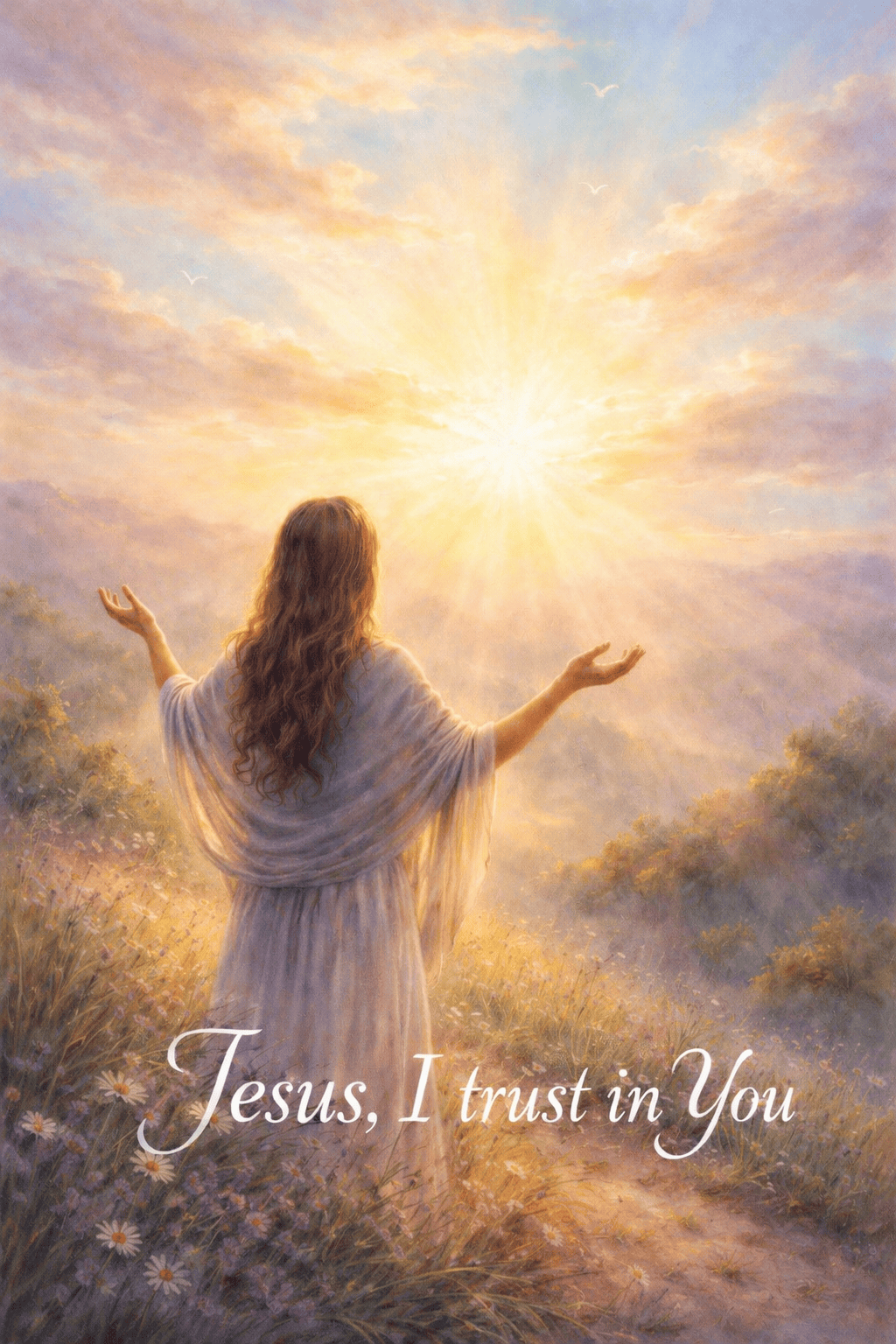
There is a quiet moment that comes in healing—one that doesn’t announce itself, but you feel it. It usually comes after you’ve prayed your way through a crisis, after you’ve done what you know to do, after you’ve survived something you weren’t sure you would make it through. The storm begins to settle, and instead of relief, there is a deeper question waiting for you.
"Now what?"
For many of us, this is where we realize that we’ve learned how to trust God to get us through—but not necessarily to make us whole.
I remember the first time I recognized this in my own journey. I knew how to call on God when everything felt like it was falling apart. I knew how to cry out, how to surrender a moment, how to ask Him to step in when I had nothing left. And He always did. He met me there—in the pain, in the chaos, in the places where I could no longer hold myself together.
But when the immediate crisis passed, I would slowly gather the pieces of myself back up and carry them on my own again. I trusted Him to rescue me… but I didn’t yet trust Him to heal me completely.
There is a difference. Partial trust says, “God, help me survive this.” But deeper trust whispers, “God, I give You all of it.” And “all of it” is where things get tender. It’s the parts we’ve learned to live around. The patterns that helped us cope. The beliefs we quietly carry about ourselves—that we are too much, not enough, unworthy, or somehow beyond repair. It’s the places we’ve adapted so well that we don’t even realize we’re still hurting. Full healing asks us to bring those places into the light—not with pressure, but with permission. To let God sit with us there, longer than we’re used to letting anyone stay.
This is where trust begins to feel less like a concept and more like a choice. And it’s not a choice we make once and move forward. It’s one we make every day. Sometimes every hour. Sometimes every minute. Because sometimes we are living through a moment-by-moment crisis.
There have been seasons where I could not see what God was doing at all. Seasons where His silence felt louder than His promises. Seasons where I wrestled with Him—not because I didn’t believe in Him, but because I didn’t understand Him. And yet, something in me kept returning.
Not with certainty.
Not with strength.
But with fragments.
"Jesus loves me.
I am His beloved."
These weren’t phrases I could just declare with confidence. They were memories—memories of two incredible women who came alongside me during my post-abortive healing journey and my healing from sexual abuse. They became the hands, the face, and the heart of Jesus to me. I remembered them in these other painful times of my life not just because of what they said. Because of how they said it. Because of the peace they carried. Because of the way they accompanied me through very hard painful things, and saw the created me - not the traumatized me.
Through them, I began to believe—slowly, quietly—that I was called to more than just survival. And somewhere in that process, I found the courage to whisper a prayer I didn’t fully understand, but desperately needed: “Jesus, I trust in You.”
Those words became an anchor. And what a gift it was to later find them echoed in the Litany of Trust from the Sisters of Life—a prayer I have returned to over and over again. This litany has found me through so many different paths, through so many different people, at exactly the moments I needed it most.
I have sung it.
I have chanted it.
I have pleaded it.
I have held it silently in the deepest parts of my heart when I couldn’t form another word.
I have cried it out for others. And spoken it over situations I could not understand.
I have held it as a declaration when everything felt uncertain.
"Jesus, I trust in You."
I’ve prayed it in hospital rooms, in chapels, on retreats, and in parking lots. There is something sacred about giving voice to those words in the middle of uncertainty—not because everything suddenly makes sense, but because we are choosing to remain in relationship with God even when it doesn’t.
Trust is not the absence of fear, doubt, or anxiety. Trust is the belief that those fears will be met by something greater. That we will not face them alone. That we will be carried through them—shoulder to shoulder—with strength and resilience.
The litany doesn’t rush us past our fears. It names them. It brings them into the open. One of the deepest fears it uncovered in me was the fear of being unlovable. I've sat in at various ages and stages of my life truly wondering the following thoughts, and I have an idea that some of you reading this struggle with these same things. Have you ever asked:
"How could anyone love me?
Accept me?
See me as worthy?"
As I write this now, my heart is filled with compassion for the younger versions of me who lived trapped inside that belief for so many years. The Litany of Trust also confronts the fear of being left with less. Because trusting God often means letting go of the world’s definition of “enough” and learning to pursue what is actually good for our soul. And that can feel terrifying.
"Will He provide?
Will I be okay?
Will I lose everything?"
And still, we return:
"Jesus, I trust in You".
There is also the fear that healing itself will cost us more than we can bear. Because real healing requires us to revisit the pain. To sit with the grief. To acknowledge the anger, the sorrow, the injustice. I know what it’s like to avoid that. To say, “I’m okay.” To insist, “I don’t need help.” To hold everything together with white-knuckled strength.
But healing came when I stopped holding it alone. When I allowed God to sit with me in it. To hold the pain with me. To begin transforming what I thought would always define me.
"Now what?"
For many of us, this is where we realize that we’ve learned how to trust God to get us through—but not necessarily to make us whole.
I remember the first time I recognized this in my own journey. I knew how to call on God when everything felt like it was falling apart. I knew how to cry out, how to surrender a moment, how to ask Him to step in when I had nothing left. And He always did. He met me there—in the pain, in the chaos, in the places where I could no longer hold myself together.
But when the immediate crisis passed, I would slowly gather the pieces of myself back up and carry them on my own again. I trusted Him to rescue me… but I didn’t yet trust Him to heal me completely.
There is a difference. Partial trust says, “God, help me survive this.” But deeper trust whispers, “God, I give You all of it.” And “all of it” is where things get tender. It’s the parts we’ve learned to live around. The patterns that helped us cope. The beliefs we quietly carry about ourselves—that we are too much, not enough, unworthy, or somehow beyond repair. It’s the places we’ve adapted so well that we don’t even realize we’re still hurting. Full healing asks us to bring those places into the light—not with pressure, but with permission. To let God sit with us there, longer than we’re used to letting anyone stay.
This is where trust begins to feel less like a concept and more like a choice. And it’s not a choice we make once and move forward. It’s one we make every day. Sometimes every hour. Sometimes every minute. Because sometimes we are living through a moment-by-moment crisis.
There have been seasons where I could not see what God was doing at all. Seasons where His silence felt louder than His promises. Seasons where I wrestled with Him—not because I didn’t believe in Him, but because I didn’t understand Him. And yet, something in me kept returning.
Not with certainty.
Not with strength.
But with fragments.
"Jesus loves me.
I am His beloved."
These weren’t phrases I could just declare with confidence. They were memories—memories of two incredible women who came alongside me during my post-abortive healing journey and my healing from sexual abuse. They became the hands, the face, and the heart of Jesus to me. I remembered them in these other painful times of my life not just because of what they said. Because of how they said it. Because of the peace they carried. Because of the way they accompanied me through very hard painful things, and saw the created me - not the traumatized me.
Through them, I began to believe—slowly, quietly—that I was called to more than just survival. And somewhere in that process, I found the courage to whisper a prayer I didn’t fully understand, but desperately needed: “Jesus, I trust in You.”
Those words became an anchor. And what a gift it was to later find them echoed in the Litany of Trust from the Sisters of Life—a prayer I have returned to over and over again. This litany has found me through so many different paths, through so many different people, at exactly the moments I needed it most.
I have sung it.
I have chanted it.
I have pleaded it.
I have held it silently in the deepest parts of my heart when I couldn’t form another word.
I have cried it out for others. And spoken it over situations I could not understand.
I have held it as a declaration when everything felt uncertain.
"Jesus, I trust in You."
I’ve prayed it in hospital rooms, in chapels, on retreats, and in parking lots. There is something sacred about giving voice to those words in the middle of uncertainty—not because everything suddenly makes sense, but because we are choosing to remain in relationship with God even when it doesn’t.
Trust is not the absence of fear, doubt, or anxiety. Trust is the belief that those fears will be met by something greater. That we will not face them alone. That we will be carried through them—shoulder to shoulder—with strength and resilience.
The litany doesn’t rush us past our fears. It names them. It brings them into the open. One of the deepest fears it uncovered in me was the fear of being unlovable. I've sat in at various ages and stages of my life truly wondering the following thoughts, and I have an idea that some of you reading this struggle with these same things. Have you ever asked:
"How could anyone love me?
Accept me?
See me as worthy?"
As I write this now, my heart is filled with compassion for the younger versions of me who lived trapped inside that belief for so many years. The Litany of Trust also confronts the fear of being left with less. Because trusting God often means letting go of the world’s definition of “enough” and learning to pursue what is actually good for our soul. And that can feel terrifying.
"Will He provide?
Will I be okay?
Will I lose everything?"
And still, we return:
"Jesus, I trust in You".
There is also the fear that healing itself will cost us more than we can bear. Because real healing requires us to revisit the pain. To sit with the grief. To acknowledge the anger, the sorrow, the injustice. I know what it’s like to avoid that. To say, “I’m okay.” To insist, “I don’t need help.” To hold everything together with white-knuckled strength.
But healing came when I stopped holding it alone. When I allowed God to sit with me in it. To hold the pain with me. To begin transforming what I thought would always define me.
Saying “Jesus, I trust in You” does not mean you suddenly have perfect trust. It doesn’t mean everything makes sense. It doesn’t mean the pain disappears. It doesn’t mean you immediately believe everything will be okay.Sometimes it simply means:
"Help my doubts.
Meet me here.
Stay with me."
Trust, I’ve learned, is not the absence of questions. It is the decision to stay, even when the questions remain. To believe God is still working when you cannot see movement. Still present when you cannot feel Him. Still good when life does not feel good. And maybe the hardest part of all—
Trusting that He is not just walking you through something … but shaping something within you that you cannot yet see.
I didn’t know God was shaping a ministry in me when I began my healing journey. I didn’t know that my honesty and vulnerability would one day help others find healing. That my story would become part of someone else’s survival. That the words “Jesus loves you” would carry weight in ways I once needed them to.
But God knew.
And if you’ve been there—tested, exhausted, feeling like you have nothing left—you are not alone. What feels impossible to us is never impossible for Him. Full healing requires us to release not only our pain—but our timeline.
I didn’t want the process I walked through. I didn’t want to revisit the pain. I didn’t want to pursue justice. I didn’t want the losses that came with it. It felt like everything was being taken. But it wasn’t loss. It was restoration—just not on my timeline. Trusting Jesus in my healing meant letting go of control and choosing, step by step:
"Jesus, I trust in You."
Not just for relief. But for restoration. Not just to get through. But to become whole. There is a sacred kind of wrestling that happens here. The kind Jacob knew. The kind that doesn’t end in defeat—but in transformation. God is not intimidated by your trauma. He is not overwhelmed by your thoughts. He is not offended by your doubts. He does not rush you. He does not shame you. He does not turn away.
He stays.
And He invites you—gently, patiently—to trust Him with more. Not all at once. But little by little. And sometimes trust looks like nothing more than staying present for one more moment. Breathing one more prayer. Whispering through tears:
“I don’t understand… but I’m still here.
Jesus, I trust in You."
Because the truth is—even when you cannot see Him working, He is. He is in the slow places. In the unseen shifts. In the healing that doesn’t announce itself, but quietly takes root. And over time, what once felt impossible begins to soften. What once felt permanent begins to loosen. What once felt broken begins to be restored.
Not because you forced it. But because you trusted Him with all of it. And maybe that is what full healing really looks like—Not a life without pain, but a life where you are no longer carrying it alone. A life where you can finally say—not just with your words, but with your whole being:
"Jesus, I trust in You."
"Help my doubts.
Meet me here.
Stay with me."
Trust, I’ve learned, is not the absence of questions. It is the decision to stay, even when the questions remain. To believe God is still working when you cannot see movement. Still present when you cannot feel Him. Still good when life does not feel good. And maybe the hardest part of all—
Trusting that He is not just walking you through something … but shaping something within you that you cannot yet see.
I didn’t know God was shaping a ministry in me when I began my healing journey. I didn’t know that my honesty and vulnerability would one day help others find healing. That my story would become part of someone else’s survival. That the words “Jesus loves you” would carry weight in ways I once needed them to.
But God knew.
And if you’ve been there—tested, exhausted, feeling like you have nothing left—you are not alone. What feels impossible to us is never impossible for Him. Full healing requires us to release not only our pain—but our timeline.
I didn’t want the process I walked through. I didn’t want to revisit the pain. I didn’t want to pursue justice. I didn’t want the losses that came with it. It felt like everything was being taken. But it wasn’t loss. It was restoration—just not on my timeline. Trusting Jesus in my healing meant letting go of control and choosing, step by step:
"Jesus, I trust in You."
Not just for relief. But for restoration. Not just to get through. But to become whole. There is a sacred kind of wrestling that happens here. The kind Jacob knew. The kind that doesn’t end in defeat—but in transformation. God is not intimidated by your trauma. He is not overwhelmed by your thoughts. He is not offended by your doubts. He does not rush you. He does not shame you. He does not turn away.
He stays.
And He invites you—gently, patiently—to trust Him with more. Not all at once. But little by little. And sometimes trust looks like nothing more than staying present for one more moment. Breathing one more prayer. Whispering through tears:
“I don’t understand… but I’m still here.
Jesus, I trust in You."
Because the truth is—even when you cannot see Him working, He is. He is in the slow places. In the unseen shifts. In the healing that doesn’t announce itself, but quietly takes root. And over time, what once felt impossible begins to soften. What once felt permanent begins to loosen. What once felt broken begins to be restored.
Not because you forced it. But because you trusted Him with all of it. And maybe that is what full healing really looks like—Not a life without pain, but a life where you are no longer carrying it alone. A life where you can finally say—not just with your words, but with your whole being:
"Jesus, I trust in You."