Prayer, Planning, and Preparedness
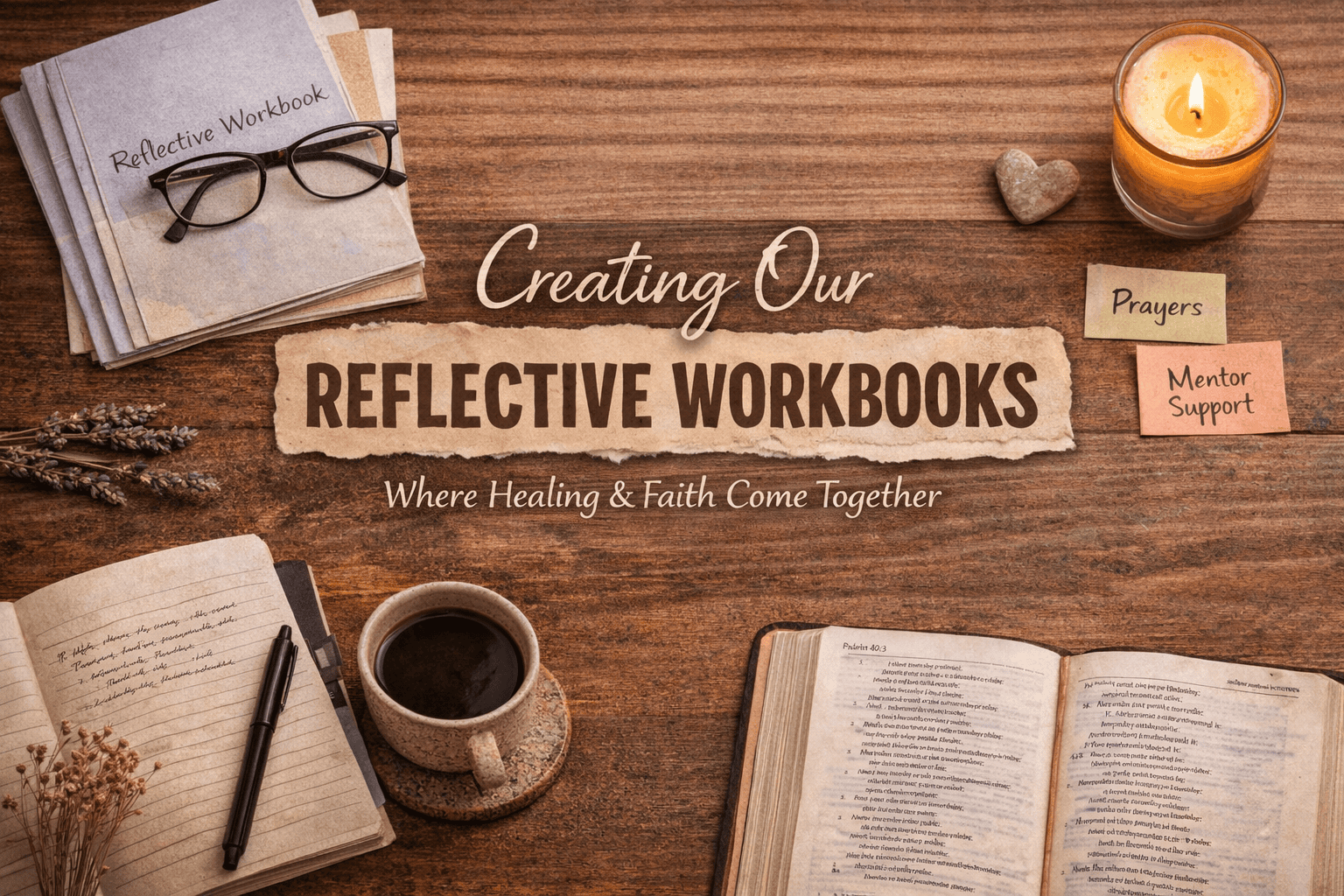
When someone opens one of our reflective workbooks, they see a booklet of pages separated by tabs that are full of words to help them process their traumatic experiences.
But what they are actually holding is prayer, research, lived experience, theological discernment, nervous system science, and months (sometimes years) of refinement.
Creating a Phasing Out of Trauma Reflective Workbook is not simply about writing content. It is about building scaffolding for healing that is holistic, and addresses emotional, spiritual, relational, and neurological challenges one week at a time.
Here’s what really goes into it.
We Start With the Nervous System. and before we write a single prayer, question or reflection we ask questions to properly discern what is needed within this Phase. These questions include:
What happens in the body when trauma is activated?
Where are women likely to dissociate?
Where might shame surface?
What could feel overwhelming too soon?
Every section of our Reflective Workbook is made to regulate before it moves forward. That’s why we suggest women take the time during the early weeks of their Phase Study Groups to use grounding tools like breath work, relaxing imagery, and somatic awareness to help ground and center themselves reminding them they're safe. For example, in our activities section you’ll find practices like:
Box Breathing, where they learn how to Box Breath while focusing on God being there for them.
Returning to the Refuge, where they take a mental break and imagine a safe, supportive and calming environmental space where God is approachable, and they can reset.
Body Scan with Breath Release, where they can safely notice what is going on in their bodies without expectations, asking God to help them find greater relaxation and release.
We are mindful about these, because safety must come before activation. We believe that we must model taking the time to ground and center, so you'll see us incorporate these and other techniques into each of our meetings as well.
We never rush disclosure. We build capacity first.
We Build in Weekly Structure (So No One Gets Lost)
Trauma recovery can feel chaotic. Everyone is starting at a different place, with different tolerances for different things. We recognize that, and we don't ask women to follow a one size fits all approach. So we've built empowerment within our weekly structures, so each woman has some choice in what she spends her time on, yet there are communal experiences they can all unpack together within the Phase Study Group Setting.
Each Reflective Workbook is meant to be completed within 2-3 months, and each week women are asked to read the assigned chapters within the Phase Work Book that the group is reading through together. This is the communal experience. Each chapter has a coresponding reflection page, that offers the women a chance to incorporate what the author has shared into their own lives, experiences, impressions and memories.
We've then poured over YouTube to find videos that are accessible, from experts, and people who are talking about our trauma topics in order to pair each chapter with an appropriate video that helps to ground our women in both the psychological and spiritual aspects of the Phase they are working on. After they watch the videos, they're given a reflection page to complete again, to bring the message into their personal lives.
These are the 2 unifying aspects of our Phase Study Groups. Aside from these, we offer Trauma Informed Activities, and Spiritual Practices, and Soul Practices that they're encouraged to complete when they're ready, and as it makes sense for their experiences. None of these additional things are mandatory - and each can be entered into at each individual woman's own time. Many of these are things they will re-visit at different Phases, so there is no rush, no hurry and no pressure.
This is how we keep everyone together while honoring their own unique pace, and the safety they've cultivated with their bodies, prayer, God, their stories, encouraging them that as they continue with this process that safety will expand and what they couldn't do during one Phase is accomplishable in another.
Healing is not random — it is paced. This helps participants move from: “I’m overwhelmed” to “I know what to do this week.” This predictability restores stability. And choice restores agency and empowerment - things that were often taken away and abused by people in leadership roles over them in the past.
We Pair Reflection With Regulation
Right from the beginning, the first Activity they encounter in our Phase 1 Reflective Workbook is Making This Your Time, and they're given several ways to ground, center, return to the hear and now, pause, and stop the work so that they control the flow, and stay in control of how they encounter their trauma along the way. We continue this process of pairing reflection with regulation, while building the tolerance to access deeper places within themselves as they move through the necessary psychological and spiritual scaffolding of the Phases.
For example:
If we invite them to explore where grief shows up in their story, we provide grounding practices so they can remain present.
If we ask them to explore shame topics, we include compassionate embodiment activities to restore peaceful processing.
When we come to the place where they're ready to unpack abuse, they are given protective prayer, somatic experiencing, and presence exercises.
We never leave someone in emotional exposure without offering containment. And we model this within each Phase Study Meeting, after we share we always ground and regulate before moving our meetings forward.
We Integrate Scripture Carefully — Not Aggressively
Too many women have had faith, and the Bible used against them to hold them in abusive and harmful relationships and family structures. Here within our Reflective Workbooks, scripture is never used to silence pain, it's always used as a way to show women that God doesn't avoid difficult conversations, experiences, and memories.
They are used to acknowledge our heritage, and to show how God walks alongside those who are suffering, and how He provides for them.
For example, when we introduce Psalm 40:2 (“He lifted me out of the pit…”), we present multiple translations and invite slow reflection rather than doctrinal correction. Our Phases are not courses in what the Bible teaches - they are more journeys through our shared trauma stories, and through the shared redemptive messages, promises, and covenants God has left for us.
We Beta Test Everything and We Join You in Your Study
Before any of our workbook gets in the hands of one of our members, we have worked through it ourselves to see how it feels - to test "is it accessible." If there is anything that feels off, sits with us wrong, or turns us off, it's re-worked. It doesn't stay part of our program. That means after all that collaboration, cultivation, curation of questions, prayers, scriptures, videos, activities, and practices, we're willing to start from scratch if it doesn't sit right with us. That's right - we'd rather start over than offer a woman something that does not serve her.
When that happens, we take the time to fine tune, or re-work whatever came up lacking, and we test the new version, updated edition.
Once we're happy that it provides what we're looking for, then we offer groups where we process and work through the materials again, right alongside the women who are reading it for the first time. We don't used canned responses from years ago, we give current, up-to-date answers that are real, raw and vulnerable to foster trust, respect, and to ensure integrity of our process.
Healing does not happen in isolation, so even though we've already worked through the materials before going through them again within a Phase Study Group, we get so much more out of the process when we complete it alongside our group!
Above All — We Pray
Before printing.
Before handing it to a woman in crisis.
We pray.
Because these are not just worksheets.
They are invitations:
To re-enter the body.
To untangle distorted images of God.
To mourn what was lost.
To reclaim what was stolen.
To walk toward wholeness.
Each page carries the quiet hope that when a woman whispers,
“God, please see me,”
she will begin to experience that He already does.
When you open one of our reflective workbooks, you are not opening content. You are stepping into a carefully built healing container — one designed to move at the pace of your nervous system, honor your story, and restore your dignity. And we consider it sacred work.