A Phase 16 Reflection
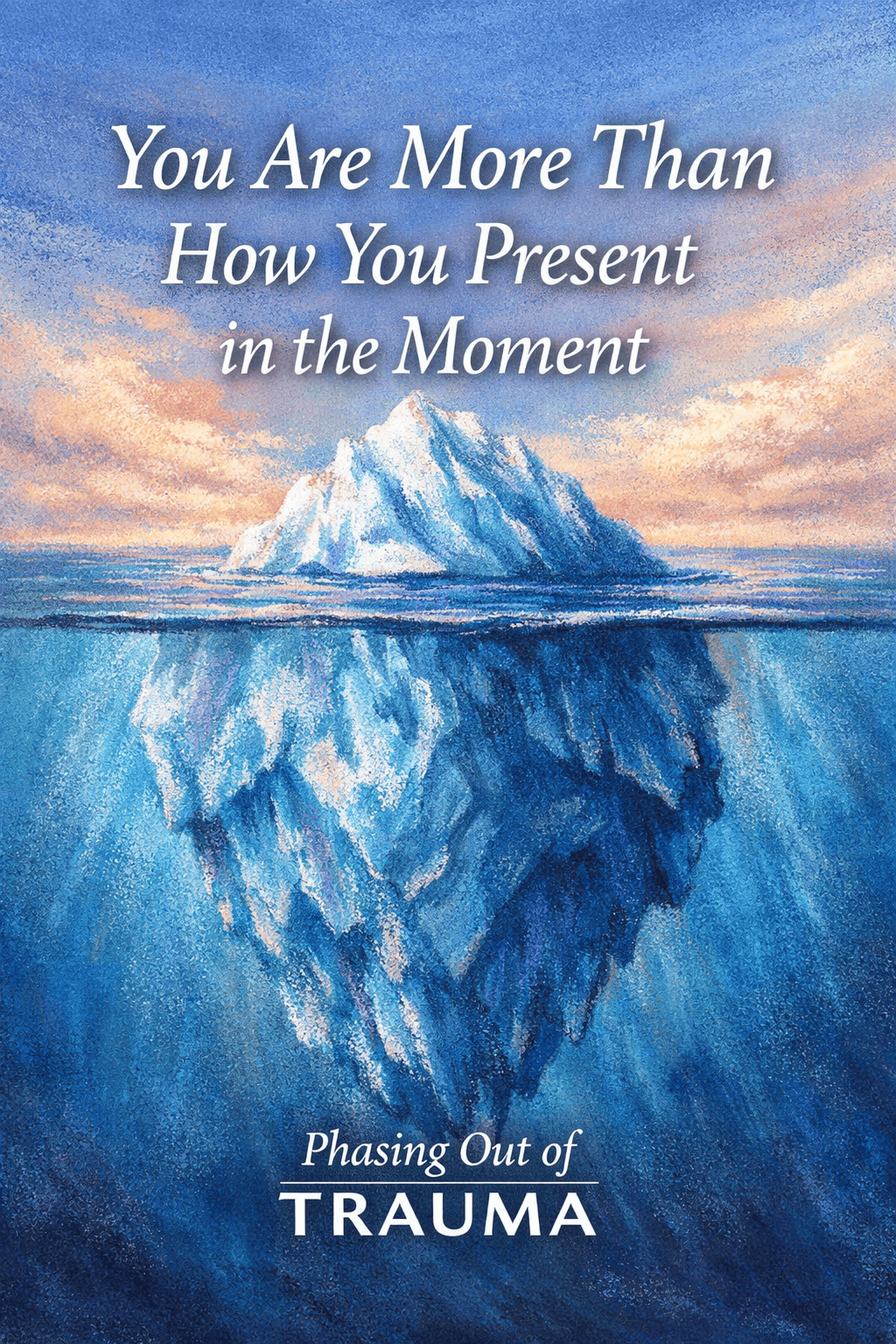
You are more than what people see, in this moment, in the moments of your past, and in the moments yet to come.
In our relationships, people rarely encounter the whole of who we are. Most often, they meet us in moments. A conversation at work, a quick exchange at home, a disagreement with a friend, a moment when we are calm and composed, or a moment when we are overwhelmed and struggling. From the outside, these moments can look like the whole story, but they are not. Much like an iceberg, what others see above the surface is only a small portion of what exists beneath it. Beneath the visible moment are the experiences, memories, fears, hopes, strengths, and wounds that have shaped the person standing in front of them. This reflection practice invites us to slow down and remember that we are always bringing far more into a moment than what others see, and just as importantly, we are often bringing far more into the moment than we remember ourselves.
This awareness begins by recognizing the positive qualities we consistently bring into our relationships. Many women who are recovering from trauma have spent years developing strengths that others depend on. You may be the person who remembers everyone’s birthdays, the coworker who helps keep projects organized, the friend who listens patiently when someone is in crisis, or the family member who quietly checks in when others are struggling. You may be the calm voice when others panic, the dependable one who always shows up, or the one who holds emotional weight for the people around you. These strengths are real and meaningful parts of who you are, and the reality is that you're holding an impossible burden. Even if you weren't recovering from trauma, everyday people who carry great strength are still human. We become tired. We miss deadlines. We forget things. We run out of emotional energy. Many women who are known for their resilience are quietly holding far more than others realize, and this can create a painful dynamic. When life becomes difficult, people often assume that the strongest person will be able to handle it. The belief that “she is strong, she can handle this” can lead others to step back at precisely the moment when support is most needed.
This often leaves women who have supported countless others standing alone when they are facing their own challenges. That is not to say that those surrounding them do not care. More often, people simply do not realize help is needed, and many trauma survivors have learned to survive by carrying their burdens silently. Unfortunately, admitting the need for support can feel uncomfortable or even impossible because they have built credibility out of being the dependable one, the capable one, the independent one, and they fear what others will think if they were to admit that in some moments they are the ones who need support, help, and compassion.
Yet part of healing and moving beyond our trauma involves recognizing that asking for help is not a failure of strength. It is simply another form of courage. It is equally noble to be the person who asks for help as it is to be the person who offers it. And, it's equally dignified to be the person receiving assistance as the person giving it. Society has instilled in us that "charity" is a bad thing, a shameful thing, while the Bible tells us that "charity" is the highest form of love.
When we begin acknowledging that we are carrying a great deal and that we cannot continue adding endlessly to our plates, we start creating healthier expectations within our relationships. We give others the opportunity to support us in ways they may not have realized were needed, and we understand why we're not living up to expectations - expectations that were unrealistic, implausible and inhumane.
Once we can recognize that our weakness are with us even when we act out of our strengths, our courageous, and our capabilities, we then have the mirrored understanding of how we respond during difficult emotional moments. Trauma survivors are often deeply familiar with times when they feel triggered, flooded with memories or emotions, or overwhelmed by circumstances that exceed their capacity in the moment. During these times we may react more strongly than we intended, say things we wish we had expressed differently, disappoint someone we care about, or feel as though we have completely lost our footing. These experiences can easily lead to shame, which often tells us that our worst moment reveals who we truly are.
However, trauma responses do not define our identity. They are simply moments when our nervous system has been pushed beyond what it can manage comfortably. The same person who reacted strongly in a difficult moment is also the person who has handled many other situations with patience, compassion, and care. When we remember this broader truth, we begin to treat ourselves with grace, mercy, and compassion instead of judgment. This also allows others to extend that same grace to us. Learning to respond to ourselves with compassion is essential for staying out of shame and continuing to grow in resilience. When we can recognize that we are not our trauma responses, and that in the moment when we are acting out of character we're still bringing all of those moments when we have responded as our true selves, we can lay shame aside, and move forward in dignity.
One thing you'll hear us talk about a lot is how our trauma prevents us from feeling emotions. This reflection encourages us to track our emotional arcs. Trauma often leads people to shut down their emotional lives as a way to survive. While this may initially protect us from pain, it can also dull our ability to experience other emotions such as joy, excitement, serenity, or wonder. As healing progresses, emotions may begin returning in ways that feel unfamiliar. This practice helps remind us that the emotions we feel today exist within a much larger emotional story. When we feel excited about something new, we are also bringing with us the memory of times when we felt afraid or uncertain. When we experience calm or peace, we are the same person who once lived through chaos or confusion. When sadness surfaces, we are also the person who has known laughter, delight, and moments of deep connection. Recognizing this emotional range helps us reconnect with a fuller sense of ourselves and reminds us that it is safe to feel again. The person who once felt fear, joy, curiosity, grief, and hope unfettered and unfiltered before our traumatic experiences is still present within us today, and that person can help us regain the ability to feel fully again.
Another part of this reflection invites us to recognize that we carry all the stages and roles of our lives into each moment. We often define ourselves by who we are right now, but our identity is much richer than a single snapshot in time. The woman sitting at a desk feeling uninspired today may also be the bright-eyed child who once stared in fascination at the plasma ball during science class. The confident professional leading a meeting may still carry the memory of the nervous teenager who rehearsed what to say before raising her hand. The woman who runs marathons may remember the gangly adolescent who felt awkward running in front of other girls during physical education. A mother caring for her children today may also carry the memory of the frightened child who once hid from her own mother. Every stage of life contributes to the wisdom, empathy, and strength we carry forward. When we recognize this, we begin to see that each moment contains far more of our story than anyone else can perceive.
This reflection takes on special significance during Phase 16 of the Phasing Out of Trauma journey, where we begin focusing more intentionally on our relationships. During this phase, participants are invited to consider how they present themselves to individual people in their lives. One person may experience them as dependable and strong. Another may perceive them as guarded or distant. Someone else may see them as endlessly accommodating. Each perception reflects only a portion of the story. The practice encourages women to recognize that they bring far more into each relationship than what any single person can see. It also invites them to consider the equal and opposite truths that may exist within their experiences. Someone who appears strong may also carry deep vulnerability. Someone who seems independent may still long for support and connection. Someone who appears quiet may hold a rich inner life filled with thoughts, hopes, and ideas. Recognizing these truths allows women to make healthier decisions about how they wish to move forward within their relationships. In some situations they may discover that the strengths they have built in other areas of their lives can guide them here as well. In other situations they may recognize that certain dynamics are simply too complicated or overwhelming to address immediately. Healing does not demand rushing. It requires honesty and patience.
The reflection concludes by acknowledging that healing is a journey rather than a destination. It is not about becoming perfect or eliminating every difficult moment. Instead, it is about learning to see ourselves more truthfully and more compassionately. As we do this work, we recognize both the strengths we carry and the places that still need care. We learn to offer compassion to the parts of ourselves that are still growing. Throughout this process we are reminded that God remains present in every part of our story. He is present in moments of strength and in moments of struggle, in times when we feel confident and in times when we feel uncertain. The reflection practice invites each participant to create a personal statement that reminds them of these truths. It becomes a way to return to the deeper story of who they are as they continue moving forward in their healing journey.
If you're ready to acknowledge the fullness of who you are, and to remember and bring forward the parts of you that your trauma has tried to take away, we invite you to work through this reflection with us on YouTube. If you're not there yet, because you're still trying to hold space for your trauma story, we invite you to join us in a General Meeting in person or online by visiting here.