Relationships After Trauma
Healing does not end when the flashbacks quiet or when the nightmares soften. It does not even end when forgiveness begins. Healing continues into our relationships. Phase 16 is where trauma recovery meets real life. It is where the internal work begins to show up in conversations, boundaries, friendships, dating, marriage, parenting, church, and community. It is often here that women realize some relationships will grow, some will shift, and some will end — and all of it requires courage.
Trauma does not only wound our bodies and memories; it shapes how we attach, trust, withdraw, pursue, over-function, or disappear. Many of us learned to over-give to stay safe, stay silent to avoid conflict, rescue others to feel valuable, accept crumbs because we feared abandonment, or become fiercely independent because dependence once hurt. When survival becomes our relational strategy, it can be difficult to tell the difference between love and fear. Phase 16 gently invites the question: Am I loving from wholeness, or from survival? That question alone has the power to shift an entire relational landscape.
One of the greatest myths trauma survivors carry is the belief that setting boundaries is mean, selfish, un-Christian, or unloving. But boundaries are not punishment, and they are not walls. They are clarity. They are the difference between supporting and rescuing, forgiving and tolerating harm, being available and being consumed. Even Jesus walked away from crowds. He did not answer every demand. He did not entrust Himself to everyone. Boundaries are not a lack of love; they are love with wisdom.
As healing deepens, relationships often reveal themselves more clearly. You may discover a friendship that strengthens as you become more honest, a partner who respects your growth, or a community that truly supports healing. You may also discover that someone preferred the unhealed version of you, that a dynamic only worked when you stayed small, or that a relationship was built on imbalance rather than mutuality. Growth exposes truth, and truth can feel both freeing and heartbreaking. It is okay to grieve relationships that cannot grow with you. It is okay to release dynamics that cost you your peace. It is okay to choose safety.
One of the most difficult lessons in this Phase is recognizing that you are not responsible for someone else’s healing. You are responsible for your honesty, your growth, your boundaries, and your repentance when needed. You are not responsible for forcing someone else to change, managing their emotions, convincing them of your worth, or carrying what they refuse to heal. Mature love is not enabling, controlling, or fixing. Mature love stays open and kind, but it does not abandon itself in the process.
As trauma loosens its grip, healthy relationships begin to feel different. There is mutuality instead of imbalance, repair after conflict instead of silent resentment, emotional safety instead of hypervigilance, space for individuality instead of enmeshment, and freedom to say no without fear. You may find yourself laughing more easily, relaxing in rooms you once scanned for danger, sharing without rehearsing, and resting without bracing. These shifts are not accidental. They are the fruit of the work you have done.
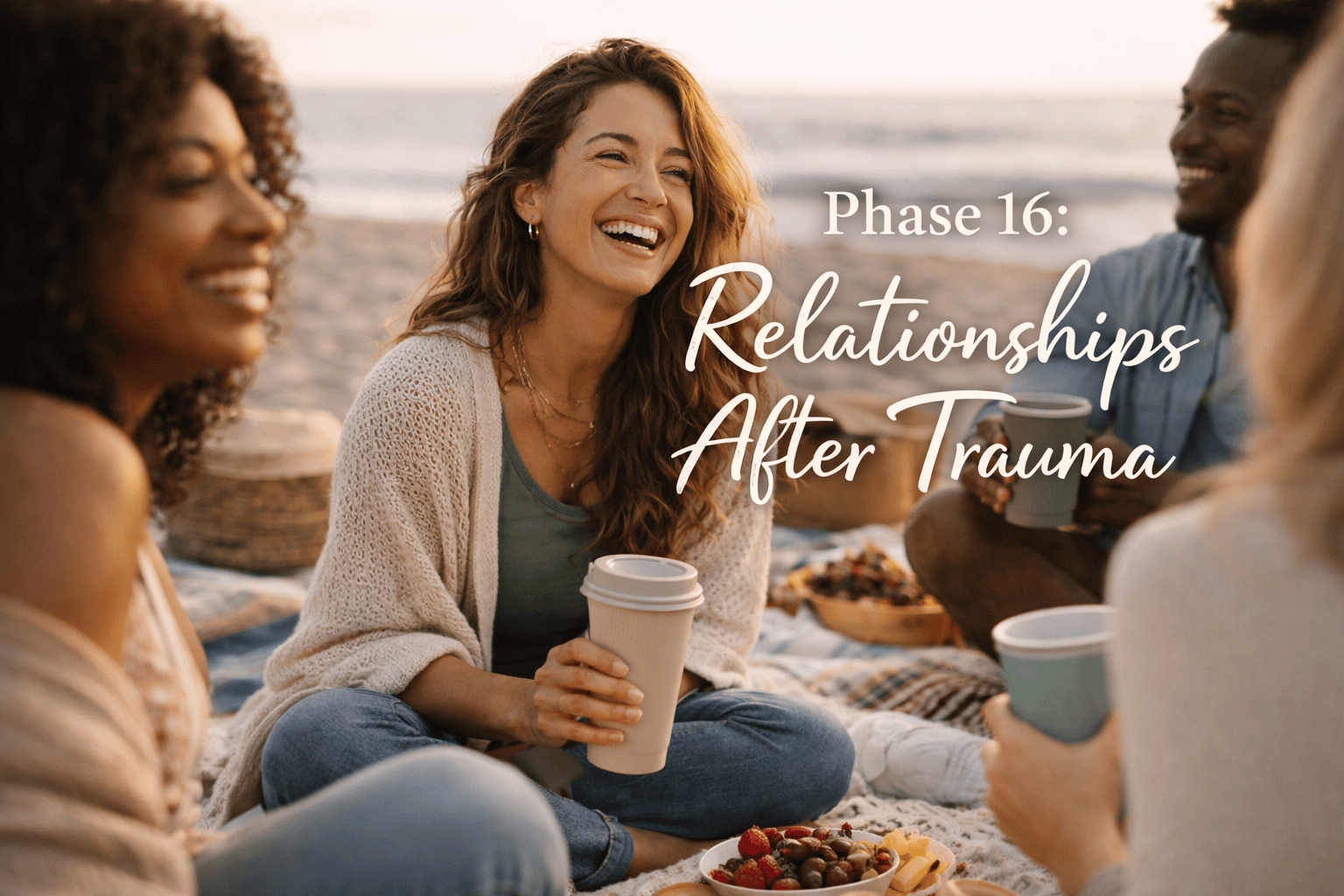
Phase 16 is not only about what you leave behind; it is about what you step into. It is about friendships that nourish, community that celebrates growth, and moments — perhaps sitting at the beach with trusted friends — where you are no longer scanning for threat but simply enjoying connection. It is about rediscovering ease, belonging, joy, and choice. It is about realizing that you are no longer surviving relationships; you are participating in them.
This phase is quiet but powerful. It does not always come with dramatic declarations. Instead, it shows up in smaller, braver decisions — speaking honestly, stepping back when needed, leaning in when safe, choosing relationships that reflect growth rather than fear. When you begin to relate from wholeness instead of survival, everything changes. And that is healing.