Phase 13:I am ready to resolve my trauma with those who were responsible and with those who failed to address it. I will honor myself and God as we redeem my story.
There comes a point in every healing journey when the ache of the past meets the strength of the present.
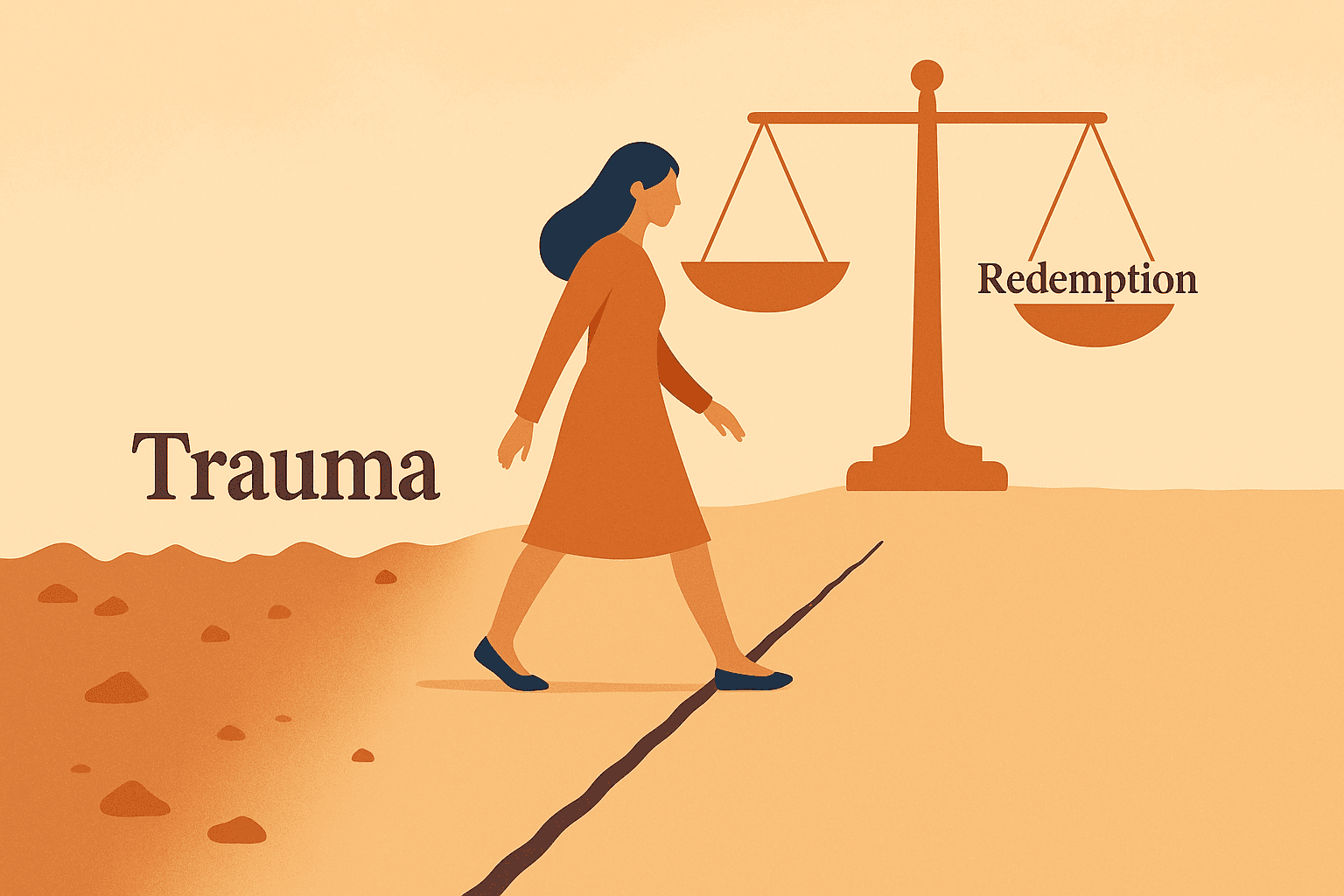
Phase 13 is about resolving our trauma with the people who caused it — and those who failed to protect us — not by reopening wounds, but by allowing God to redeem what once broke us.
For many of us, this step is the hardest one yet. We can’t truly enter this phase until we’ve done the deep work of the first twelve phases — the six Sitting with Our Trauma phases, where we learned to recognize how our experiences have shaped our lives, and the Processing Our Trauma phases, where we began to release, piece by piece, what was dumped on us.
Through that work, we reclaimed our dignity, our worth, our voice — and in Phase 12, we grieved what was lost. At the end of grief, we find acceptance.
And once we’ve entered the sacred place of acceptance, we become ready to do the holy work of confrontation — to face the wrongs and discern with God what resolution looks like, so that we can emerge redeemed and honor what He has transformed.
Why This Step Matters
Unresolved trauma keeps us tied to the very people or moments we long to move beyond. We replay conversations that never happened, wait for apologies that never come, or hold onto resentment as proof that what we endured mattered.
At the time of our trauma, we often had no voice, no control, and no way to affect change. We turned to others we trusted — expecting protection, compassion, or intervention — but far too often, our cries for help fell on deaf ears or hardened hearts. Some ignored our pain. Others deepened it. Many looked away. These are the double and triple betrayals that leave deep wounds.
Now, as we enter the final six phases — Moving Beyond Our Trauma — our first task is resolution. This means allowing the echoes of pain to finally quiet, and reclaiming our empowerment, courage, and dignity. It means saying, “No more.” We are no longer the punching bag, the whipping post, or the scapegoat. We are beloved daughters of God who have walked through the fire — and survived.
Resolution will look different for everyone. The most important truth is this: resolving trauma no longer depends on someone else’s response.
It’s about our internal peace — knowing we’ve done what we needed to do to honor our own healing and rescue the parts of ourselves that were silenced, shamed, or forgotten.
Healing here isn’t about forcing reconciliation or pretending it didn’t hurt.
It’s about recognizing that we no longer need the person who caused our pain to validate it.
We can choose peace for ourselves.
We honored what happened as we Sat With Our Trauma.
We grieved what we lost as we Processed Our Trauma.
And Now We Seek Peace and Justice as We Move Beyond Our Trauma
“If it is possible, as far as it depends on you, live at peace with everyone.” — Romans 12:18
Peace in this phase is not about outward harmony — it’s about regaining inward peace.
As we processed grief, we uncovered our anger — not as sin, but as signal. Anger revealed the injustices that needed to be named, the losses that needed to be mourned, and the boundaries that needed to be drawn.
Phase 13 is about drawing those boundaries with clarity and conviction — saying enough to torment, abuse, and neglect, while doing so in a way that honors both your story and your safety. So that you can finally say:
“I did everything I could.”
“I honored myself.”
“I am finally free to become me again.”
Honoring Ourselves and God in the Process
In this phase, we learn to:
- Acknowledge that our worth was never diminished by their actions.
- Discern what resolution looks like for us — knowing it will look different for every story.
- Invite God to re-frame our story through His mercy and restoration, trusting that we are still in the middle of redemption, not the end of it.
As we resolve what once felt un-resolvable, we honor both our own healing and God’s faithfulness — a sacred partnership that transforms pain into peace.
Moving Forward
If you’re just beginning your healing journey, this is not where you need to start.
Your journey begins in Phase 1 (or in our Tag Out Phase). Each step equips you for the next — there are no time limits, no expectations, and no “finish line.” Healing unfolds in God’s timing, and we honor that.
If you’ve been with us since the beginning at Newbreak Church, remember: simply exploring these phases is not the same as completing them. Healing is not linear, and we would never expect you to resolve a lifetime of trauma in a month.
This month’s group gatherings will focus on teachings and practices to help you understand this phase, but you’ll move through your journey at your own pace.
When you’re ready to move into Phase 13 — after celebrating Phase 12 and its work of grief — know that your leaders and your community will be cheering you on, holding you up, and praying for you every step of the way.
And if you’re new to Phasing Out of Trauma, welcome.
You can begin at the Tag Out Phaseunder our Home Page and request access to Phase 1 when you’re ready.
Your journey is sacred, and we are honored to walk it with you.